999 ALSTONMOOR

Despite our best effortsNWAS downgraded our service

FinalWords

Thursday, 10th October 2024
A STATEMENT FROM MEMBERS OF THE ‘SAVE ALSTON MOOR’S SERVICES’ CAMPAIGN GROUP


“A story of a community that came together to fight for its ambulance"

Why we started the campaign…

In 2021 the residents of Alston Moor became aware that their Community Ambulance and its dedicated crew of Emergency Medical Technicians (EMTs) were under threat. North West Ambulance Service (NWAS) announced their plans to take away the emergency vehicle and to disband the EMT teams as they (NWAS) are unable to support the group as EMT’s due to the new qualifications and certificates required. Our tight-knit community of around 2,500 people, spread over a beautiful but remote landscape of 80 square miles pulled together to do everything we could to stop this from happening.

A small but determined group of residents formed the group ‘Save Alston Moor’s Services’. Our aim was to keep our residents and visitors as safe as possible and for the medical care available to be the most sophisticated and up to date as possible.

The NHS Ambulance Standards state that the average response time for life-threatening illnesses or injuries (category 1) is seven minutes and emergency call-outs (category 2) 18 minutes. Without an ambulance and EMTs on Alston Moor it takes a MINIMUM of 40 minutes to reach the scene. That time could easily stretch to two hours or more, depending on the weather, traffic and if, through no fault of their own the ambulance sent from Penrith, Carlisle or even as far as Preston and Manchester can't find the location due to their lack of local knowledge.

A Freedom of Information Request submitted to NWAS in 2022 compared NWAS ambulance response times on Alston Moor. The data was requested from 2018 > 2021

• C1 (Life Threatening) 81% of callouts involved the ambulance taking longer than
7 minutes
• C2 (Emergency) 54.3% of callouts involved the ambulance taking longer than
18 minutes
• C3 (Urgent) 5.8% of callouts involved the ambulance taking longer than 120 minutes
• C4 (Non-Urgent) 3.8% of callouts involved the ambulance taking longer than
180 minutes


These figures were presented to NWAS at a meeting at the Town Hall, they did not deny them, they even quoted that they recognised the data as it was NWAS that supplied it.

More than 13 Freedom of Information requests were submitted, most were submitted to NWAS although others were submitted to organisations such as Cumbria Police.

So in a nutshell, that was our challenge…. to save Alston Moor’s Ambulance Service!

This is what we did and what we achieved….

We wrote to:- Cumbria Police and Crime Commissioner and received a letter of support from him, The County’s Chief Constable, Cumbria County Council, The Bishop of Carlisle, the Bishop of Newcastle, Chair of Eden District Council’s Health Scrutiny Committee and Dr Neil Hudson, our then MP.

• A letter of support was received from Baroness Elizabeth Barth in the House of Lords. Baroness Barker was responding to a letter written to her by a resident of Alston Moor.
• We worked alongside GMB workers’ union who were representing our EMTs. We also liaised with Alston Moor Parish Council and other appropriate organisations.
• A dedicated website was designed and developed to keep the community informed with campaign information and the latest updates. There were also several templates and a list of key contacts available to download. These enabled people to write to decision makers more easily. Additionally, there was access to printable PDFs of the campaign leaflets and posters.
• Frequent activity on social media, mainly Facebook and X (formerly Twitter) throughout the length of the campaign.
• Production of regular update flyers which were distributed around Alston Moor which were paid for by donations from both local residents and visitors to Alston Moor.
• Production of a campaign letter. This was a response to the NWAS letter delivered by Royal Mail to every household. Our follow-up letter was hand-delivered by volunteers to as many households as possible, right across Alston Moor.
• Production of several large campaign banners which were installed in key outdoor locations to ensure maximum exposure which were also paid for by donations from both local residents and visitors to Alston Moor
• An extensive media campaign, including regular press releases. This activity secured regular articles in local newspapers and featured several times on local radio and television. The campaign to save our ambulance was picked up on by the nationals, including The Observer and The Guardian. The ‘I’ newspaper freelance journalist, Paul Gallagher travelled to Alston Moor to meet with members of the campaign group. This meeting resulted in a substantial article in both the newspaper and their website. The campaign was even covered by the New York Times!
• Members of the campaign and AMPC attended Alston Moor Community Ambulance Campaign Working Group meetings, which were eventually chaired by the independent body, Healthwatch.
• Several alternative models were researched and suggested by SAMS to NWAS. These included a model already proving successful in Berwick-upon-Tweed and a model in which a paramedic practitioner would be based at Alston’s GP surgery who could also attend ambulance call-outs, enabling transportation of the patient to hospital if necessary.
• Consistent attendance at local events, including Alston Gala, Alston Agricultural Show and Producers Markets to keep the campaign and the Group's activities in the public eye.
• The campaign secured the full backing of the then Member of Parliament for Penrith and the Borders, Dr Neil Hudson. Several letters were exchanged with him and members of the group and others met with Dr Hudson for an ‘around the table’ discussion in an attempt to move things forward.
• Last but not least, 100s of signatures were collected in the form a petition. This petition called for adequate / improved emergency provision for residents and visitors of Alston Moor. This petition was sent to Dr Hudson.
• These are the major activities undertaken, but the list does not include the numerous acts of help and support given by people on Alston Moor and beyond, throughout the campaign. From writing to key contacts and influencers to displaying a poster in their window or a sticker in their car… they all made a difference to the impact achieved, regardless of the final outcome.

Despite all these actions, regrettably it became necessary for SAMS to engage with Irwin Mitchell LLP, one of the biggest law firms in the country. We felt that the many attempts for meaning dialogues with the decision makers were not making the progress we had hoped for.

Clearly, taking legal action was a huge step for the campaign. Anyone who has made a challenge in the courts will know how arduous the legal system is, especially when disputing an organisation such as NWAS. This action would not have gone ahead if it hadn’t been for the legal aid system, but that in itself proved to be an extremely gruelling and stressful experience for the group’s representative.

Conclusion…
If you have taken the time to read through all the actions that the Save Alston Moor’s Ambulance campaign delivered over the period of nearly three years, then we hope you agree that the campaign and the volunteer campaigners did their utmost and tried every feasible route to ensure a favourable outcome for Alston Moor and its emergency aid provision.

We bitterly regret that ultimately, we didn’t achieve what we set out to, but along the way we gained the support of many, many individuals, groups and organisations.

Opposing an organisation such as NWAS was never going to be easy. They claimed to be acting in our best interests, whilst following national guidelines. However, we believe that Alston Moor is in such a unique location that has dramatically different demographics and populations to urban conurbations such as Carlisle and Blackpool. One size definitely does NOT fit all!

We thank every single person who contributed to the campaign, whether that was financially or with their time, efforts and ideas. The monies the campaign group had left at the end amounted to just over £1000. This money has been transferred to Alston Moor’s Community First Responders and will be spent on essential equipment to enable them to give anyone needing their assistance and support, the best possible care.

It's not entirely clear to us what the future holds for us with regards to emergency care facilities and provision on Alston Moor. As NWAS has told us several times, policies and guidelines are constantly changing and a new government may have different ideas.

If you are unfortunate enough to need to call an ambulance and it does not meet the required attendance time or NWAS does not have the capacity to send an ambulance at all, then please write and complain.

These complaints should be picked up by the Care Quality Commission and questions asked. This website:- 999alstonmoor.com will remain live for the foreseeable future. There you will find advice on who to write to and letter templates which will help to get you started.

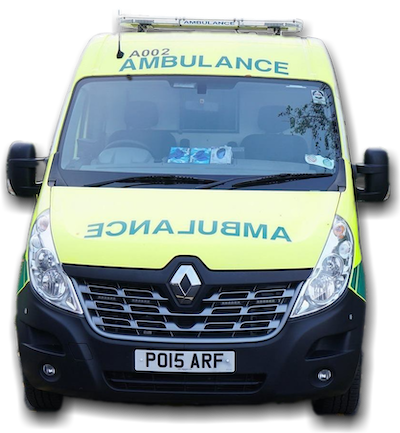
We do know that we have lost our ambulance. It is no longer based in Alston. Instead NWAS have given us a rapid response vehicle in appropriate livery. But no blue light. You may have seen it around and about.

We remain sincerely grateful to the men and women who give up their time to respond to the needs of people in the local area when they are needed. We genuinely don’t know what we would do without you.

Signed
Members of the Save Alston Moor’s Services campaign group
Date: 10/10/2024

NOWArchived

BACKGROUND

Alston Moor's Community Ambulance and its dedicated crew is under threat. North West Ambulance Service (NWAS) has announced plans to take away the emergency vehicle and make the Emergency Medical Technicians (EMTs) redundant. This tight-knit community of around 2,500 people spread over a beautiful but remote landscape of 80 square miles is pulling together to do everything they can to stop this from happening. Alston Moor, nestled high up in the North Pennines is a popular tourist destination. An ideal base not only for Cumbria, but for visiting Northumberland, Teesdale, the Lake District and even Scotland. We want our residents to be safe, but also our very welcome day-trippers and holiday-makers.

The NHS Ambulance Standards state that the average response time for life-threatening illnesses or injuries (category 1) is seven minutes and emergency call-outs (category 2) 18 minutes. Without an ambulance and EMTs on Alston Moor it would take a MINIMUM of 40 minutes to reach the scene. That time could easily stretch to two hours or more, depending on the weather, traffic and if, through no fault of their own the ambulance sent from Penrith, Carlisle or even as far as Preston and Manchester can't find the location due to their lack of local knowledge.

This website provides information about our campaign. The background, what we've done, what we're planning to do and all the latest up-to-date news and events. Please sign our petition and email us with ideas and any other support you can offer. Most of all tell as many people as you can about the 'Save Alston Moor's Ambulance' campaign. The fight to save our services is a monumental one, but if we all work together we can win.

It is a fight we MUST win, because if we fail then there is one certain – lives will be lost!


Stacks Image 134

LATESTNEWS

Letter to the NWAS Directors

Letter to the Ambulance Directors

Written by: | Posted on:

F.A.O. Daren Mochrie (CEO), Salman Desai, and other Directors of NWAS

This letter comes to you with support from a large section of the community of Alston Moor. We are appalled and barely able to believe the recently-announced intention to withdraw our ambulance with its Emergency Medical Technicians. We can only assume that those making the decisions are not fully aware of the situation of Alston Moor, especially in terms of our geography, the concomitant weather and roads, and unaware of the history of the project.

Over seven years ago, we made the case for retaining our ambulance, at a previous point when it was threatened. We pointed out that ours is the most remote settlement in England, spread over a large area at 275-450 metres (900-1500 feet) above sea level. All but one of the five routes to/from here go over high passes, including the road to Penrith, our nearest urgent treatment centre, which reaches nearly 600 metres and is frequently closed in winter by snow and ice. The route to the nearest main hospital with accident and emergency provision is 30 miles from Alston (and an additional distance of up to seven miles from some parts of Alston Moor). Our permanent population is just over 2000 people, but frequently much-enlarged by visitors, not only in the summer but by some who come to stargaze or ski in the winter.

As NWAS staff became aware, through representations from many residents of Alston Moor (and finally through their own experience coming here for a public meeting) this is not a community that can be treated in the same way as most of the communities in the area covered by NWAS. As a result of these understandings, at that meeting in January 2014 Salman Desai tasked NWAS officers with establishing, in collaboration with us, a fully equipped, staffed and functioning blue-light ambulance. Since then, it has, sadly, been a struggle at every step to attempt to make this commitment a reality, as poor project management by NWAS has made it very difficult bring the intentions to full fruition.

The community has worked hard with NWAS staff to keep our vital service in place and to find solutions to challenges that have arisen. It is beyond disappointing that no Board members seem to have realised the situation resulting from the poor management. The announcement that our ambulance is to be terminated feels like a betrayal of the intentions of those NWAS people who committed to creating, with us, an excellent local ambulance service.

Our dedicated and committed Community First Responders, some of whom have only recently completed their training, will, if this plan goes ahead, find themselves in the unenviable position of being expected to attend calls which will only be backed up with an ambulance and trained crew 45 minutes later at the very earliest (and may indeed be waiting with a seriously ill or injured person for up to two hours, longer in severe winter conditions). Many may baulk at being put in such a position, having trained in the understanding that our local skilled and experienced crew would arrive very quickly, even if still unable to transport patients. Ambulances which can transport sick and injured people are sent here from considerable distances when (as seems to happen often) there is no free ambulance that could get here within an hour (and a wait of up to two hours is not uncommon).

The NHS Ambulance Standards state that the average response time for life-threatening illnesses or injuries (category 1) is seven minutes and emergency call-outs (category 2) 18 minutes. Without an ambulance and EMTs on Alston Moor, we would have nothing resembling these standards.

An additional issue is that ambulance crews from elsewhere frequently struggle to find the sites where someone needs help, across our widely-flung community. Satnav often goes to the wrong place or suggests impossible routes, and the ‘what three words’ app provides a clear indication of where someone is, but gives no hint about how to reach it. Currently, our local ambulance crew knows how to get to a place and guides the ambulance from elsewhere – and makes sure they understand the direction to go when they leave.

Awareness of this situation contributed to the decision of NWAS in early 2014 to ensure that we retained our unique ambulance service.

Since then, our Cottage Hospital in Alston has had its beds removed and promises by North Cumbria Healthcare Trust concerning provision there have also not been fulfilled. We are sure you will understand that local residents are very worried by the situation, which would be made inordinately worse without our ambulance.

We rely on tourism to a large extent (as does much of Cumbria) and some potential visitors will be discouraged once they realise the lack of emergency care, which will have an impact on the local economy. Many of those who might consider moving here – and we need new people to come and ensure that our economy and our schools are thriving – will be deterred by the lack of the help they assume and expect elsewhere in the country. Road accidents (and the huge numbers of bikers who come through certainly contribute to rather more accidents than in other places) and serious illness can happen at any moment, anywhere.

Self-reliance has been a hallmark of Alston Moor, given our location and the weather at this height. Despite the small population, we have been able to raise thousands of pounds towards our emergency services. We have always united in the face of threats to our survival as a community, and we will do so again.

However, without urgent medical care, our situation becomes exceptionally difficult, if not disastrous. We believe that Salman Desai and his colleagues understood what was needed and fully intended that a fully-functioning blue-light ambulance would be established and supported here. It is disappointing that their promise has been let down by poor project management.

We are sure you will want to remedy the situation. Not only would you not welcome adverse publicity – particularly in the event of disaster that might occur if the ambulance is removed – we are certain that this could be a real feather in your cap if you commit to working with us to establish a proper ambulance service on Alston Moor. Given what is at stake, we anticipate a favourable response.

Yours sincerely

On behalf of the residents of Alston Moor

Sunday July 11th, 2021
Prev